Facebook
 X
 Pinterest
 Copy Link
It’s true,
Every part of Oregon has some natural hazard, and every one of them can be looked up and planned for. Wildfire matters most in Southern Oregon and forested areas, flooding near rivers and low ground, tsunami in parts of the coast, and earthquake statewide. Free state and federal maps show the risks for any address, and the right insurance and inspections cover most of the rest.
If you’re moving here from somewhere else, you’ve probably read a headline or two. Cascadia. Wildfire smoke. Atmospheric rivers. It can sound like a lot.
Here’s the calmer version. Oregonians live with these hazards the way Midwesterners live with tornadoes and Floridians live with hurricanes: by knowing what’s nearby, preparing a little and buying the right coverage. None of it is a reason to skip Oregon. It’s just part of buying a home here with your eyes open.
A quick note: we’re real estate agents, not insurance agents, engineers or geologists. This guide covers the basics. For any specific home, talk with an insurance professional and qualified inspectors.
Step one: look up the address
Before we go hazard by hazard, here are the two free tools worth bookmarking.
- Oregon HazVu: the state’s Statewide Geohazards Viewer, from the Oregon Department of Geology and Mineral Industries (DOGAMI). Type in an address to see mapped hazards, including earthquake shaking, soft soils, active faults, landslides, flooding, tsunami, coastal erosion, volcanoes and radon. DOGAMI notes that not every hazard has been fully mapped, so treat it as a starting point.
- FEMA Flood Map Service Center: the official source for federal flood maps. Search an address to see its flood zone.
Oregon’s seller disclosure statement also asks sellers whether a property is in a designated floodplain or in a designated slide or other geologic hazard zone, and whether it has had damage from things like fire, floods, earthquakes or landslides. Read those answers closely.
Wildfire
Where it matters most: Southern Oregon, the Cascade foothills and other forested or grassy areas where homes meet open land. Late summer and early fall are the main season, and smoke can drift well beyond the fires themselves.
What changed recently: In 2025, the Legislature repealed the statewide wildfire hazard map that had assigned properties to hazard zones. The state is developing model codes that local governments can choose to adopt, so rules about building and defensible space can vary by city and county. Ask the local planning department what applies.
What it means for insurance:
- Wildfire risk can affect whether a home is easy to insure and what coverage costs, especially in heavily forested or rural areas. Get an insurance quote early, before you’re deep into a purchase.
- Under a 2023 Oregon law, insurers that cancel, decline to renew or raise premiums for reasons related to wildfire risk must tell you why, and point to steps that could reduce the risk when available. Insurers also can’t use a state-published wildfire map as the basis for those decisions.
What it means for inspections and upkeep:
- Look at the roof, gutters, vents, decks and what’s growing near the house. Fire-resistant materials and a clear area around the home make a real difference.
- The Oregon State Fire Marshal offers free defensible space assessments, an education-focused visit with tips for your property. The guidance starts with the first five feet around the house: think gravel or pavers instead of bark mulch, and no flammable plants against the walls.
- For rural properties, ask which fire district serves the home and how far away the nearest station is.
Earthquake
Where it matters most: statewide. The Cascadia Subduction Zone runs offshore along the coast, and Oregon also has other faults. Shaking can be stronger on soft soils, which HazVu shows.
What it means for insurance:
- According to the Oregon Division of Financial Regulation, most homeowner policies don’t cover earthquake damage. Earthquake coverage is purchased separately, and only about 20 percent of Oregonians have it.
- Earthquake deductibles work differently. They’re usually a percentage of the coverage amount, often 10 or 15 percent, rather than a flat dollar figure.
- Earthquake coverage generally doesn’t cover a tsunami, landslide or volcanic eruption, even if an earthquake triggers it. More on tsunamis below.
- Insurers often pause new earthquake policies for a while after a major quake, so it’s coverage you buy ahead of time.
What it means for inspections:
- Oregon’s seller disclosure asks whether a house was built before 1974, and if so, whether it’s bolted to its foundation. For older homes, ask your inspector about seismic retrofitting, like foundation bolting and bracing.
- Strap the water heater and secure heavy furniture once you move in. It’s a weekend project that pays off.
Flood
Where it matters most: low ground near rivers and creeks across the Willamette Valley, Lane County and Southern Oregon, plus coastal rivers and bays. Most of Oregon’s rain falls between fall and spring, so that’s when rivers run highest.
What it means for insurance:
- Most homeowners policies don’t cover flood damage. Flood insurance is a separate policy through the National Flood Insurance Program or private insurers.
- If a home is in a high-risk flood zone (a Special Flood Hazard Area) and you have a federally backed mortgage, flood insurance is required.
- NFIP policies usually have a 30-day waiting period before coverage starts, with exceptions such as when the policy is purchased in connection with a mortgage loan.
- Floods don’t stay inside the lines. According to FEMA, almost one-third of NFIP claims from 2014 to 2024 came from outside high-risk areas.
What it means for inspections:
- Ask the seller for any flood history and whether they’ve carried flood insurance. Their answers on the disclosure statement are a good place to start.
- For homes in or near a flood zone, ask whether an elevation certificate exists. It can affect insurance pricing.
- Have your inspector look closely at crawlspaces, drainage, grading and sump pumps.
Tsunami
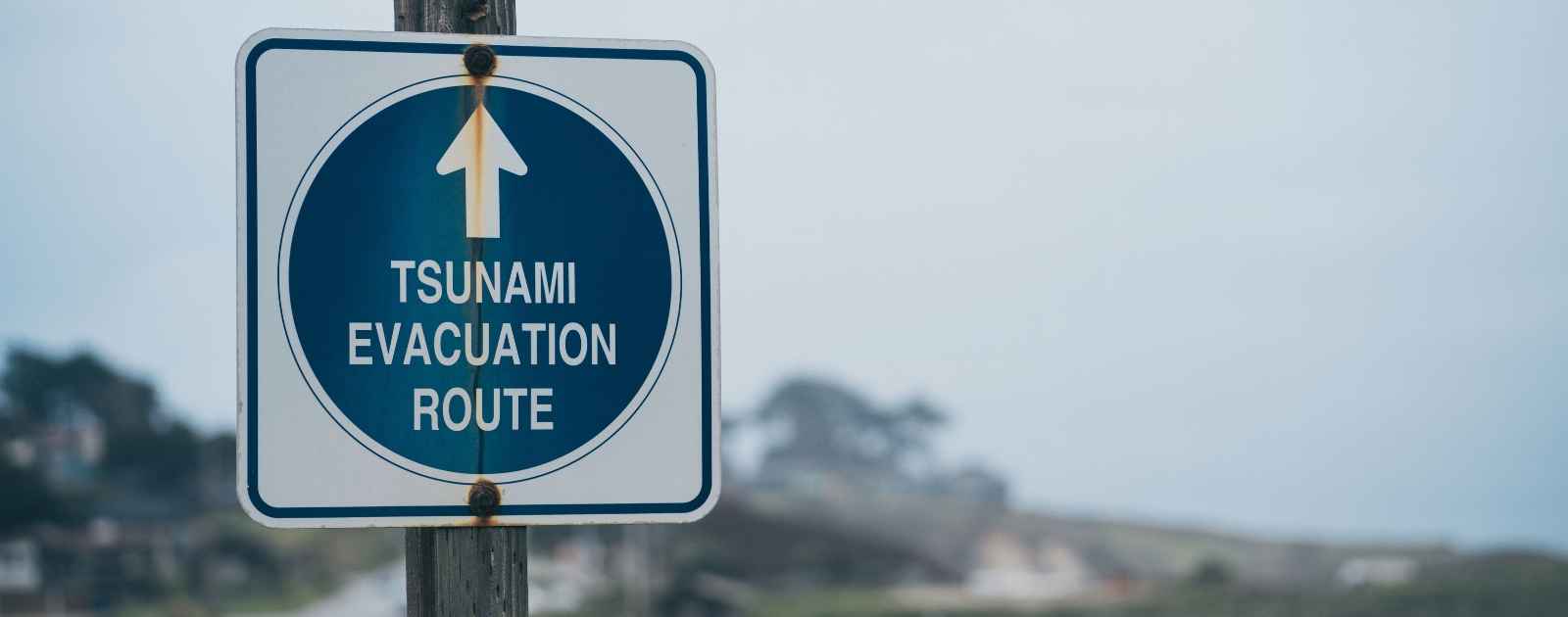
Where it matters most: low-lying parts of the Oregon Coast, near beaches, bays and river mouths. Many coastal homes sit on higher ground outside the zone, and the maps make it easy to tell which is which.
What it means for insurance:
- Here’s the one that surprises people. According to the Oregon Division of Financial Regulation, flood insurance typically covers tsunami damage, while earthquake insurance does not. If you’re buying in or near a tsunami zone, talk with your insurance agent about flood coverage, not just earthquake coverage.
What it means for planning:
- DOGAMI publishes tsunami evacuation maps for the coast, including detailed neighborhood maps you can print at home.
- The free-to-download NANOOS Tsunami Evacuation app lets you check whether a home, school or workplace is inside an evacuation zone.
- Coastal locals know the rule: if you feel a strong earthquake at the coast, head to high ground right away. Walk your evacuation route once after you move in so it feels familiar.
What to watch for near each of our offices
Every property is different, so always check the specific address. As a general guide:
- Oregon Coast: tsunami zones in low-lying areas, coastal erosion and landslides on some bluffs and slopes, and flooding near coastal rivers. Meet our Tillamook office, our Lincoln City office and our Newport office.
- Yamhill County and the West Linn area: flooding near the Willamette and Yamhill rivers and their creeks, earthquake shaking and soft soils, and landslides on some hillsides. Meet our Newberg office, our McMinnville office, our Sheridan office and our West Linn office.
- Salem and the mid-Willamette Valley: river flooding on low ground and earthquake shaking. Meet our Salem office.
- Eugene and Lane County: river flooding on low ground, earthquake shaking, and wildfire in forested areas outside town. Meet our Eugene office.
- Medford and Southern Oregon: wildfire and summer smoke, river flooding on low ground and earthquake shaking. Meet our Medford office.
Oregon hazards at a glance
| Hazard | Where to look it up | Insurance | Inspection and prep |
| Wildfire | Local planning department; OSFM defensible space resources | Usually part of homeowners coverage, but availability and cost vary. Get a quote early. | Roof, vents, gutters and the first five feet around the house; free OSFM assessment |
| Earthquake | Oregon HazVu | Separate policy or endorsement, with a percentage deductible | Foundation bolting for older homes; strap the water heater |
| Flood | FEMA Flood Map Service Center; Oregon HazVu | Separate flood policy; required in high-risk zones with a federally backed mortgage; 30-day wait | Flood history, elevation certificate, crawlspace and drainage |
| Tsunami | DOGAMI evacuation maps; NANOOS app; Oregon HazVu | Typically covered by flood insurance, not earthquake insurance | Know your evacuation route to high ground |
A calm homebuyer’s checklist
- Look up the address on Oregon HazVu and the FEMA flood map.
- Read the seller disclosure statement’s hazard questions carefully.
- Get homeowners insurance quotes early, and ask separately about earthquake and flood coverage.
- Ask your home inspector about drainage, roofing, vents and, for older homes, seismic retrofitting.
- For hillside or bluff properties, ask whether a geotechnical evaluation makes sense.
- After you move in, build a simple emergency kit and learn your local alert system.
Quick questions
Does homeowners insurance cover earthquakes in Oregon?
Usually not. Most Oregon homeowner policies don’t cover earthquake damage. Earthquake coverage is purchased separately, and the deductible is usually a percentage of the coverage amount, often 10 or 15 percent.
Do I need flood insurance in Oregon?
If the home is in a high-risk flood zone and you have a federally backed mortgage, flood insurance is required. Even outside those zones, it’s worth considering, since standard homeowners policies don’t cover flood damage.
Does Oregon still have a wildfire hazard map?
No. In 2025, the Oregon Legislature repealed the statewide wildfire hazard map. The state is developing model codes that cities and counties can choose to adopt, so local rules may vary.
How do I find out if a home is in a tsunami zone?
Use DOGAMI’s tsunami evacuation maps, the NANOOS Tsunami Evacuation app or the Oregon HazVu viewer. Each lets you check an address against mapped tsunami zones on the Oregon Coast.
The takeaway
In Oregon, the hazards are real, but so are the maps. Look up the address, insure what your policy leaves out, and enjoy the place you chose.
For local commentary, community events and monthly market updates from our real estate coaches and professionals, follow along on Instagram at @coldwellbankerpg.oregon.
This article is general information, not insurance, engineering or legal advice. Coverage, rules and maps change over time.